Public speaking course
A public speaking course teaches you to structure a talk, deliver it and handle nerves, with feedback on speeches you give. Below, 13 courses side by side: online and in person, by cost, length and certificate.
Are you after a course that leaves you actually speaking better, not just knowing more?
Just browsingA course hands you the method. The change comes from saying it out loud and hearing what to fix, so run it in three steps:
- Pick one course from the list below for the method: structure, voice, slides.
- After each lesson, give a two-minute talk on it the same day.
- Get feedback on every rep in Confidently: a random prompt and sixty seconds to answer, or a full talk up to 30 minutes. It shows where you sped up, counts each um, reads your face, marks where you trailed off and gives a confidence score. Free for 3 days on iPhone and Android.
Last reviewed
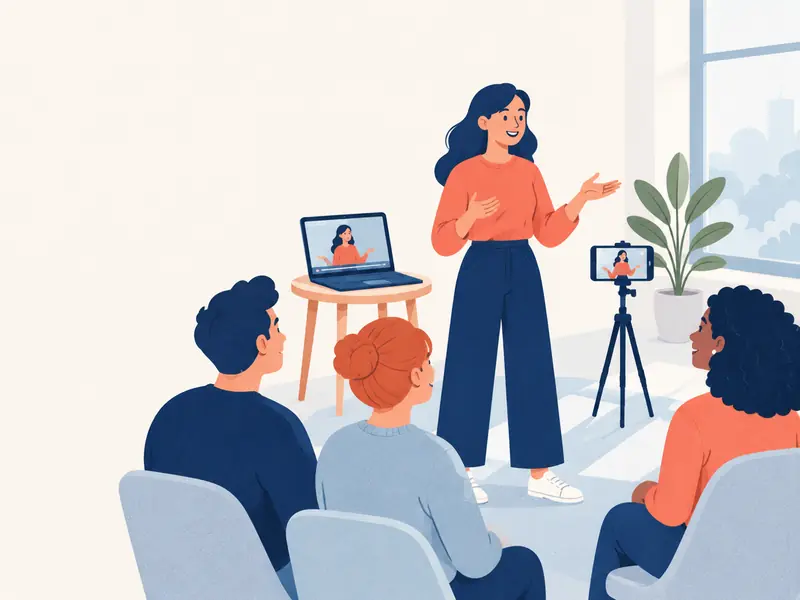
13 public speaking courses compared
Two top picks for practice first, then eleven well-known courses: online and in person, free and paid. Facts from each provider's own page.
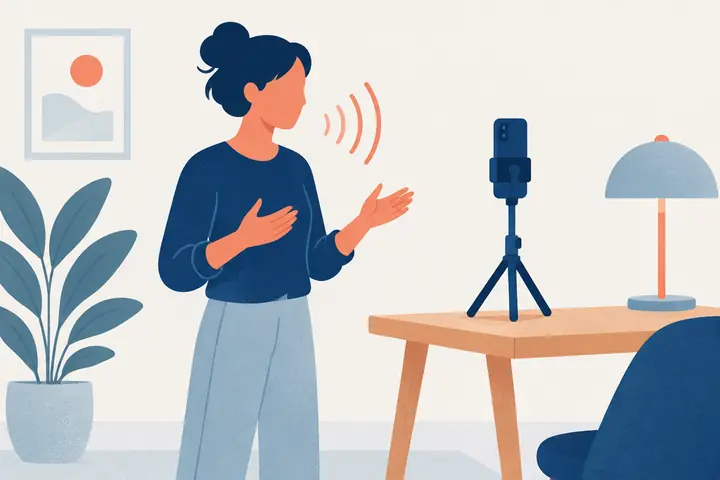
Top pick for daily practice
Confidently: practice app with feedback
Best for: Daily reps with feedback, next to any course on this list
- Format: Phone app, iPhone and Android
- Length: One-minute reps, or a talk up to 30 minutes
- Cost: Free practice mode; 3-day free trial
- Certificate: No certificate
Answer a random prompt for sixty seconds or rehearse a whole talk. Afterwards it marks rushed stretches, tallies each um, reads your expression, flags sentences that faded and gives a confidence score. Recordings stay private; in 12+ languages.
What it can't do: put real people in front of you.
Try the free practice mode
Top pick for a live audience
AmberWillo: live practice sessions online
Best for: Speaking in front of real people from home; fear of public speaking
- Format: Live video groups of up to 15
- Length: Short speaking rounds, on your schedule
- Cost: Free to start
- Certificate: No certificate
An online platform for public speaking anxiety built on guided exposure: you speak on camera to people with the same goal and get a confidence score, coaching notes and a milestone after each round.
Good to know: sessions are in English; no one-on-one coaching.
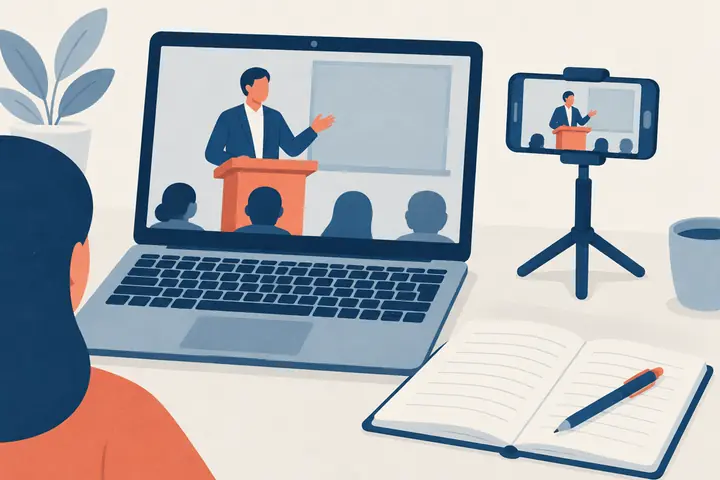
Introduction to Public Speaking (University of Washington, Coursera)
Best for: Beginners who want one complete method
- Format: Self-paced video, peer-reviewed speeches
- Length: 5 modules, about 10 hours
- Cost: Free to enroll; certificate paid
- Certificate: Shareable certificate (paid)
Dr. Matt McGarrity covers structure, delivery, nerves and a final speech; some assignments are AI-graded, and a VR room adds a virtual audience.
Rhetoric: The Art of Persuasive Writing and Public Speaking (HarvardX, edX)
Best for: Pitches and persuasive speeches
- Format: Self-paced video
- Length: 8 weeks, 2 to 3 hours a week
- Cost: Free to audit
- Certificate: Verified certificate, $209 listed
Professor James Engell draws on classical rhetoric and real-world examples; more about making the case than the stage.

Public Speaking (Sophia Learning)
Best for: College credit you may transfer
- Format: Self-paced online, college level
- Length: At your own pace
- Cost: Monthly membership after a free trial
- Certificate: 3.0 semester credits (ACE)
Pass/fail: 70% across 14 challenges, 5 milestones and 5 touchstones. The membership auto-renews; transfer rules vary by school.
Public Speaking Foundations (LinkedIn Learning)
Best for: A quick overview before a presentation at work
- Format: Self-paced video lessons
- Length: About 1 hour
- Cost: Subscription; 1-month free trial
- Certificate: Certificate of completion
Laura Bergells covers preparing, warming up and delivering a speech, short enough for one evening.
Public Speaking (Alison)
Best for: A short free start
- Format: Self-paced video
- Length: 1.5 to 3 hours
- Cost: Free course
- Certificate: CPD-accredited certificate (optional)
Covers preparing and delivering a speech, from nerves to body language and voice; check the certificate's current price.
Udemy public speaking courses
Best for: One narrow skill, such as pitches or slides
- Format: Video by independent instructors
- Length: Varies by course
- Cost: Paid per course; a few free
- Certificate: Certificate on paid courses only
Quality varies by instructor, so read the curriculum first; Udemy is not an accredited institution.
TED Masterclass
Best for: Learning TED's own approach to a talk
- Format: Video lessons on YouTube Courses (US only)
- Length: Length not stated
- Cost: Check current price
- Certificate: Certificate not stated
TED calls it its official public speaking course; proceeds support TED-Ed's nonprofit work.
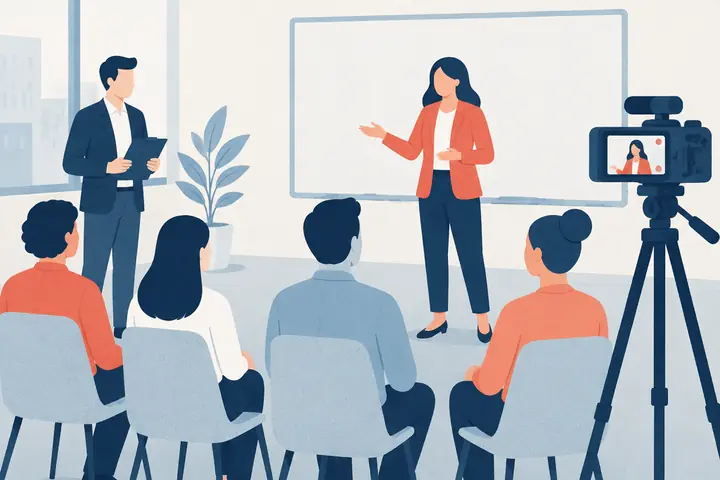
High Impact Presentations (Dale Carnegie)
Best for: Recorded talks with coaching after each one
- Format: Live, in person or online
- Length: Two days, or several half-days
- Cost: Paid; check current price
- Certificate: Ask the provider
You give several presentations, each recorded on video and followed by coaching; the length depends on the office.
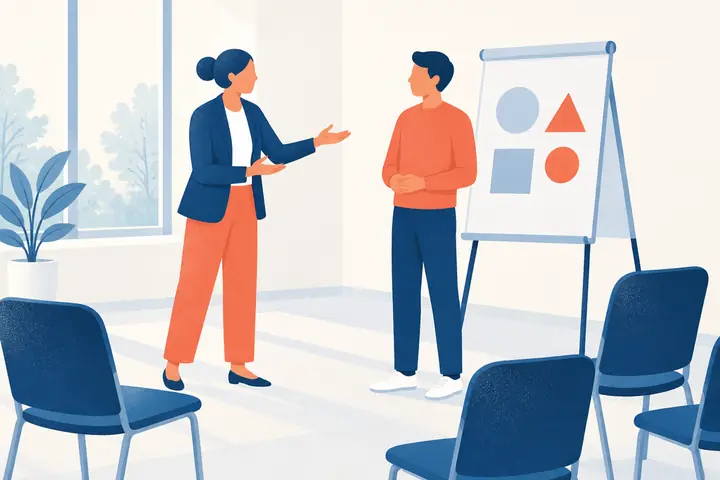
Fearless Presentations class
Best for: A big talk soon, with one-on-one coaching
- Format: In person in US cities
- Length: 2 days
- Cost: $2,295 per person listed
- Certificate: Certificate of completion
Limited enrollment in cities such as Los Angeles, Dallas and Atlanta; group discounts; a separate prerecorded course exists.
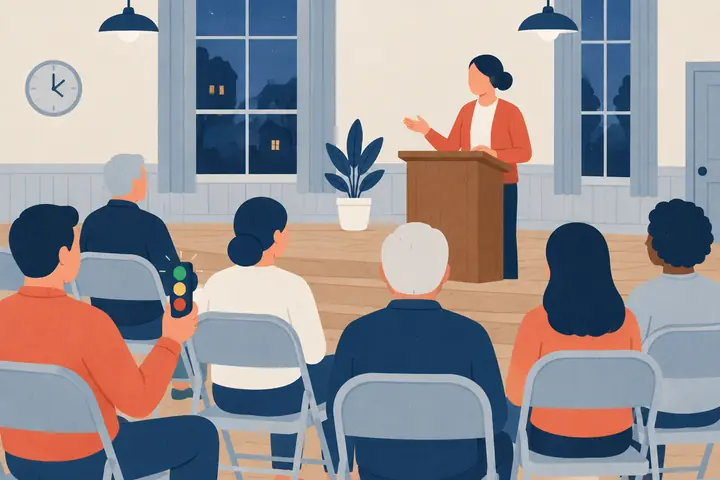
Toastmasters International club
Best for: Regular stage time over months
- Format: Club meetings, in person or online
- Length: Ongoing
- Cost: Visits free; $25 to join, $72 per six months
- Certificate: Peer evaluations instead
Members give prepared and impromptu speeches and evaluate each other.
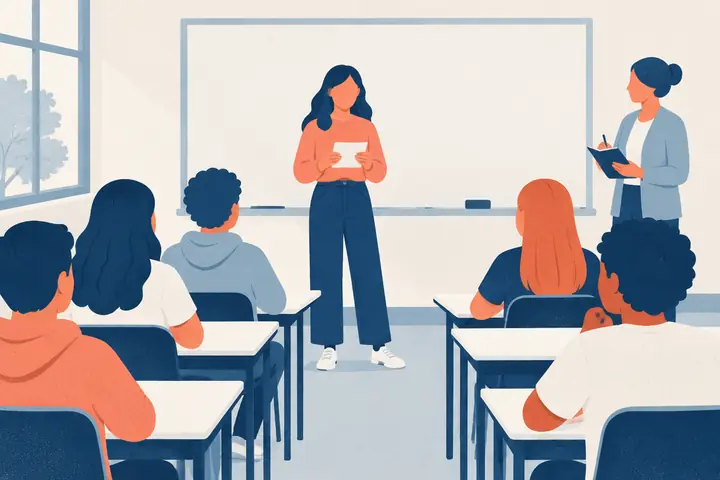
Community college public speaking class
Best for: Graded speeches with a teacher, close to home
- Format: Teacher-led, on campus or online
- Length: One term
- Cost: Tuition per credit, or a non-credit fee
- Certificate: College credit (credit classes)
Expect informative and persuasive speeches, an outline for each and a grade; see your local catalog.
No course matches every filter. Turn one off to see more.
All 13 at a glance
| Course | Free start | Self-paced | Live | Certificate or credit |
|---|---|---|---|---|
| Confidently | ✓ yes | ✓ yes | × no | × no |
| AmberWillo | ✓ yes | × no | ✓ yes | × no |
| Intro to Public Speaking (UW) | ✓ yes | ✓ yes | × no | ✓ yes |
| Rhetoric (HarvardX) | ✓ yes | ✓ yes | × no | ✓ yes |
| Sophia Learning | × no | ✓ yes | × no | ✓ yes |
| LinkedIn Learning | × no | ✓ yes | × no | ✓ yes |
| Alison | ✓ yes | ✓ yes | × no | ✓ yes |
| Udemy | × no | ✓ yes | × no | ✓ yes |
| TED Masterclass | × no | ✓ yes | × no | × no |
| Dale Carnegie | × no | × no | ✓ yes | × no |
| Fearless Presentations | × no | × no | ✓ yes | ✓ yes |
| Toastmasters | ✓ yes | × no | ✓ yes | × no |
| Community college | × no | × no | ✓ yes | ✓ yes |
Facts from each provider's own course page, checked November 10, 2026. Prices and terms change: check the current price before you enroll. Courses other than our two top picks are named for comparison only; we have no ties to them.
Pair any course with daily reps
Lessons explain the method; skill comes from saying things out loud and learning what to fix. Few self-paced courses ever hear your voice, so add a practice layer between lessons:
- A random prompt and one minute to talk, or a whole speech to rehearse
- A note on rushed stretches and on your expression
- An um tally, the sentences that faded, and a confidence score
Free for 3 days, for iPhone or Android phones
Free vs paid public speaking course
A free course gets you the lessons; money buys you listeners who tell you how it went.
- Free
- Video lessons, a free trial or an audit track. Rarely feedback; the certificate usually costs extra.
- Paid self-paced
- A fee or subscription for the full course, graded assignments and a certificate of completion.
- Live and coaching
- The highest price per hour: you pay for an instructor's attention. Coaching is priced per session and varies by coach and city.
What drives the price: live hours, class size, one-on-one time and the trainer's experience. Ask about group discounts, financial aid and the refund policy.
Let your employer pay. Under Section 127 of the tax code, an employer can cover up to $5,250 of your education a year tax-free (IRS Publication 15-B).
Is it worth it? Yes, if it makes you speak: the career benefits show up in interviews, meetings and promotions.
Self-paced vs live: what you really get
| Self-paced online | Live (online or in person) | |
|---|---|---|
| Schedule | Any time | Set dates |
| Feedback | Rare, or peer review | Instructor and group, often on video |
| Minutes speaking | Only what you record | Shared with the group |
| Best for | Theory, beginners, tight budgets | A big talk soon, virtual presentations, executive presence |
Do the speaking-minutes math. In a 2-day class with 12 people, even if half the time is speaking rounds, you get roughly 35 minutes on your feet: about a week of short daily reps.
What a good public speaking course contains
Public speaking is talking to a group to inform, persuade or entertain. A good speaker is clear, brief and easy to follow, and that is learned by giving speeches, not by reading about them. Use this checklist on any course page:
- Structure
- One key message, an outline, strong openings and closings.
- Delivery
- Voice, pace, pauses, eye contact, gestures and body language.
- Audience
- Audience analysis and keeping people engaged.
- Speech types
- Informative and persuasive speeches, storytelling, the basics of rhetoric.
- Slides and Q&A
- Visual aids that support you, handling questions and impromptu moments.
- Nerves
- Methods for stage fright before and during a talk.
- Feedback
- Recorded speeches, peer review, an instructor or a coach.
Red flags: no speaking assignments at all, a promise to make you "fearless" in a day, no named instructor, no refund policy.
Length, certificates and college credit
- Length: short video courses take 1 to 3 hours; a typical free online course runs 1 to 4 weeks (AmberWillo free course guide), longer university ones up to 8 weeks; live classes take 1 or 2 days; a college course takes a term.
- Audit or certificate: on the big course platforms you can often audit the lessons for free and pay only for a verified or shareable certificate.
- Certificate: a certificate proves you finished, not that you speak well. A recording of you speaking proves more.
- College credit: online college-level courses can carry an ACE credit recommendation; transfer rules vary by school, so ask yours first.
How to choose a public speaking course
Choosing one means matching the format to your goal first, then the budget. For a class near you, check community colleges, adult education and local clubs. Find your goal:
reducing anxiety
Pick a course that makes you speak in small, safe steps. A meta-analysis of 30 trials found technology-assisted help works about as well as face-to-face help. For live reps from home, AmberWillo puts you on a video call with no more than 15 people working on the same thing, and it costs nothing to start.
beginners
Start with a free university course for the method, then give each lesson as a short talk. Prefer a course with recorded speeches over one with quizzes only.
work presentations
A short self-paced course covers the presentation skills for meetings and slides; for a high-stakes talk, take a live class with a group.
keynote speeches
Go live: a 2-day workshop with coaching and video review that builds leadership and communication skills. Speaking for a board or a whole company? See what executive public speaking training covers.
job interviews and sales
In AmberWillo's data from 1,851 people working on their nerves, 38% say their mind goes blank, rising to 46% in job interviews. Pick a course with impromptu answers and pitch practice.
corporate team
Ask for onsite or virtual group training built on your team's real talks. Some speaking clubs meet inside companies.
free online course
Start with free lessons, then practice out loud every day. This online public speaking course comparison sorts more options by goal.
students and English learners
Students can earn credit; non-native speakers gain most from a coach who also corrects pronunciation.
Your first month: week 1, record a two-minute baseline; week 2, structure lessons and one short talk; week 3, delivery lessons and daily practice; week 4, a full talk to real listeners, compared with your baseline.
When it's more than nerves: if fear makes you avoid school, work or social life for months, that can be social anxiety disorder (NIMH). A therapist is the right first step; a course comes second.
No time for a course this week? Start with public speaking tips you can use today.
Course questions, answered
Quick answers to what people ask.
Which course is best for public speaking?
The best course is the one that makes you speak, matched to your goal: a free university course for the method, a live class with video review for a big talk soon, and Confidently's free practice mode for daily reps.
Are there free public speaking courses with a certificate?
Yes, a few. Most free courses let you take the lessons at no cost and charge for the certificate; some short courses offer an optional certificate. AmberWillo's live practice sessions are free to start but give no certificate.
Is public speaking a hard class?
Usually not if you keep up. College courses grade outlines and speeches, and some online credit courses are pass/fail at 70%. Giving the speeches is the hard part, so practice each one out loud a few times first.
How much does public speaking coaching cost?
Coaching is priced per session and varies by coach, city and experience. Some two-day live classes include one-on-one coaching in the tuition.
How do I train myself to speak in public?
Take one course for the method, then speak daily: record a short answer to a random question, watch it, fix one thing, repeat. Add real listeners weekly.
What are the 5 C's of public speaking?
There is no single official list. A common version is clarity, conciseness, confidence, credibility and connection: say one clear point, keep it short, sound sure, back it up, and speak to your listeners.
What is the 3-2-1 rule of speaking?
It has a few versions. A common one: three main points, two supporting examples or stories, and one takeaway you want people to remember.
What are the 7 Ps of public speaking?
Pronunciation, pace, pause, punch, power, passion and posture. That's the list Archbishop Beck Catholic College uses; other schools use different P-lists.
Where these facts come from
- Coursera: Introduction to Public Speaking, University of Washington, course page
- Harvard University: Rhetoric: The Art of Persuasive Writing and Public Speaking, course page
- Sophia Learning: Public Speaking, course page
- LinkedIn Learning: Public Speaking Foundations, course page
- Alison: Public Speaking, course page
- Udemy Support: certificates of completion
- TED Masterclass: course page
- Dale Carnegie: High Impact Presentations, course listings
- Fearless Presentations: seminar schedule
- Toastmasters International: How to Join
- IRS Publication 15-B: educational assistance
- NIMH: Social Anxiety Disorder
- Public speaking fear treatments compared in a 2019 meta-analysis
- Seven-P list as taught at Archbishop Beck Catholic College
- AmberWillo: homepage and speaking problems survey of 1,851 people
- AmberWillo: free online public speaking course
- Confidently app data, 8,184 sessions with a confidence score
Course facts checked on each provider's own page. Last reviewed .